Thursday, April 25, 2013

WALT WHITMAN AND MUSIC

Of all art forms other than poetry, music had the deepest effect on Whitman.  He once said that without having come in contact with opera, Leaves of Grass would not have been written.  For those unwilling to take him at his word--he was not immune to exaggeration-- there is an abundance of convincing evidence in his work and life that confirms the primacy of music for him.  This essay will first explore some of the music that influenced Whitman, after which we will discuss poem number 26 from Song of Myself, which deals with music exclusively.

Part I Musical Influences

A.  Minstrels

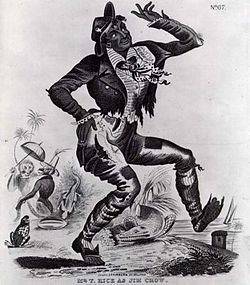
Thomas D. Rice established his "Jim Crow" routine before 1830.  He grew up in New York City; at that time there were few African Americans living in the North.  He performed a wild dance, wearing rags and blackface.  It was, of course, a crude caricature, but it caught on.  In the 1840s, and for many decades later, minstrels, which included comedy skits and song and dance routines performed by whites in blackface, were well established and enormously popular, especially in the North.  Very few objected to the racial stereotyping; not even Whitman had reservations, and, in fact, he enjoyed them.


The best known composer of minstrel songs was Stephen Foster.  He had an extraordinary gift for melody; his lovely, simple albeit somewhat sentimental tunes are popular to this day.  It is said that his songs humanized African Americans, and this is indeed true.  They avoided derogatory depictions and showed much sympathy for the enslaved.  But they were written as sentimental show-stoppers that enabled the white performers to touch the hearts of the audience; a minstrel show that consisted merely of comedy skits would have been much less entertaining.   The songs were not written to help bring about emancipation.


Foster was probably the first American to try to make a living solely by writing popular songs.  His distant heirs, such as Bob Dylan, were much more fortunate.   They were no copyright laws in antebellum America; this perhaps encouraged his attachment to the promoters of minstrels, who paid him directly.  He eventually became penniless, and died tragically alone, a few days after a minor accidental injury, at age 37.

Whitman would much later tell his friend Traubel that he thought Foster's Old Folks at Home was the best thing created by an American composer so far.  He also said that he enjoyed African-American songs. (Like so many white Americans at the time, he used a more pejorative adjective than "African-American.")


B. The Hutchinson Family Singers

The first rock stars!  (That’s what a wag called them.  They came from  a farming family in rural New Hampshire.  They loved to sing, but their father forbade them to sing at home, since he deemed this activity to be diabolical.  Thus, after working on the farm all day, they met at a large rock on their property, and sang in the evening into the night, stars under stars.)  The Hutchinsons were a group of thirteen siblings; four of them founded the group around 1840.  They began locally, but soon were a national success, even an international success.  The Hutchinson Family Singers were the first successful singing group in the United States.  At the height of their popularity, they would receive up to a thousand dollars per performance.  This was no mean sum; Whitman paid $1,750 for his house in Camden, decades after the Hutchinsons first made their tours.  They were the original Peter, Paul and Mary; many of the songs they sang were what would later be called 'protest songs.'   Their music advocated temperance, women’s rights, and, especially, the emancipation of slaves.


As mentioned previously, the group was composed of four singing members.  In true American style--this style lasted throughout the nineteenth century and was quintessentially American--one singer would sing a verse, followed by the whole group singing in closed harmony, much like a barber shop quartet. This pattern would then be repeated with a different singer leading the next verse.

The style of singing was rooted in Irish and English folksongs.  The tempos were brisk; verse and chorus were repeated with little or no variation; the singing was simple, direct, and not very nuanced; the harmonies and melodies were nothing out of the ordinary.  Many of the compositions were by Jesse, one of the brothers; he was not nearly as talented as Foster.  But the music was lively, and no doubt resulted in a lot of clapping and toe-tapping.  Unlike Foster’s, their music was of the times without in any way transcending it.  If anyone performs their music today, it is more or less out of historical curiosity.

Whitman had the following to say about them: “Simple, fresh, and beautiful. we hope no spirit of imitation will ever induce them to engraft any “foreign airs” onto their “native graces.” We want this sort of starting point to mould something new and true in American music.”  He contrasted their “heart music” with foreign “art music.”  He would soon come in contact with the world of opera, which made him profoundly “change his tune” as we shall see.

C. Opera

The opera house, located in Astor Place in the East Village of New York City, opened in 1850 and remained there until 1890.  He began attending performances--many performances--shortly after the opera house opened.  I would like to have seen the expression on his face when he first heard the sophistication, beauty and emotional depth of opera.  It transformed his inner life forever.


We will discuss this encounter with opera in the following analysis of poem 26 from Song of Myself. The poem follows.


Now I will do nothing but listen, 
To accrue what I hear into this song, to let sounds contribute toward it. 

I hear bravuras of birds, bustle of growing wheat, gossip of flames, 
clack of sticks cooking my meals, 
I hear the sound I love, the sound of the human voice, 
I hear all sounds running together, combined, fused or following, 
Sounds of the city and sounds out of the city, sounds of the day and night, 
Talkative young ones to those that like them, the loud laugh of 
work-people at their meals, 
The angry base of disjointed friendship, the faint tones of the sick, 
The judge with hands tight to the desk, his pallid lips pronouncing 
a death-sentence, 
The heave'e'yo of stevedores unlading ships by the wharves, the 
refrain of the anchor-lifters, 
The ring of alarm-bells, the cry of fire, the whirr of swift-streaking 
engines and hose-carts with premonitory tinkles and color'd lights, 
The steam-whistle, the solid roll of the train of approaching cars, 
The slow march play'd at the head of the association marching two and two, 
(They go to guard some corpse, the flag-tops are draped with black muslin.) 

I hear the violoncello, ('tis the young man's heart's complaint,) 
I hear the key'd cornet, it glides quickly in through my ears, 
It shakes mad-sweet pangs through my belly and breast. 

I hear the chorus, it is a grand opera, 
Ah this indeed is music--this suits me. 

A tenor large and fresh as the creation fills me, 
The orbic flex of his mouth is pouring and filling me full. 

I hear the train'd soprano (what work with hers is this?) 
The orchestra whirls me wider than Uranus flies, 
It wrenches such ardors from me I did not know I possess'd them, 
It sails me, I dab with bare feet, they are lick'd by the indolent waves, 
I am cut by bitter and angry hail, I lose my breath, 
Steep'd amid honey'd morphine, my windpipe throttled in fakes of death, 
At length let up again to feel the puzzle of puzzles, 
And that we call Being. 

The title Song of Myself would seem to indicate an autobiographcal poem.  It is true that the first person singular appears many times throughout the poem; the name of the author is also mentioned.  But this is deceptive.  The "I" often refers to an objective camera-type observing eye, or to a transcendent "I" of wisdom itself.  When the author mentions his own name, such as in the lines, there is little biographcal information:

Walt Whitman, a kosmos, of Manhattan the son,

Turbulent, fleshy, sensual, eating, drinking and breeding/

True, Whitman lived in New York City, but everyone is "a kosmos," and the adjectives seem to describe Whitman's ideal Everyman rather than himself.  (Whitman hardly spent his time "eating, drinking and breeding.") This poem about music is a great exception.  All the first person singulars of this poem refer to direct personal experience.  Music affects nearly everyone; it was, for Whitman, something egalitarian which had a great potential for ennobling everyday people.  It was important for him to write about music not only for political reasons, but also for very personal ones.  Music, after all, had ennobled him. His own "I" had become a witness to the beauty and depth of this art form; it didn't need any help from an "I" that was not completely 
Whitman's.

The first stanza is vintage Whitman.  Great music is found in the wonderful, everyday sounds of the world, from birds to 'steam-whistles.' One is reminded of the compositions of John Cage, a composer active a century after Whitman's death--Whitman was ahead of his times in many areas.  For John Cage,the timbre, the sounds themselves, were more important than melody, harmony and composition.  The line, "I hear the sound I love, the sound of the human voice," reflects Whitman's view exactly.  An emotional person like Whitman, as one might expect, was most moved by the most subtly emotional instrument of all.

I find it remarkable that after a stanza of cataloguing Whitman turns directly to opera.  No mention of Foster, no mention of the Hutchinsons!  He was a tireless promoter of things American; one would think that his political self would have demanded some mentioning of American music.  But here his inner life, hooked on opera--a very European art form--took completely over.

I am convinced that the "violincello" he mentions refers to the beautiful cello solo that begins the overture to William Tell, an opera he knew well.  The opening ascending phrase, not to mention that very moving melody that soon follows, undoubtedly had a great affect on him.  It is a melody tinged with melancholy; a young man at the time, he undoubtedly related to it as his own "heart's lament."

As in the poem, the overture is followed by a chorus.  The line "Ah this indeed is music--this suits me." is to be taken literally.  This--and not the music of Foster nor of the Hutchinsons was for Whitman 'the real thing."

In Rossini's opera, as in the poem, the tenor comes next.  The tessitura is high; high notes are sustained.  "The orbic flex of his mouth" would be apparent to anyone observing a tenor singing this section of the opera .  The tenor here is probably Alessandro Bettini, a great Italian tenor of the time.  (Many of the singers Whitman heard were first-rate and internationally known.)


Next comes a reference to the singer whom he loved most of all, the great Marietta Alboni.  Having been discovered by Rossini himself, Alboni had become a world-famous bel canto singer by the time she visited the United Sates.  When she wasn't engaged in New York, Whitman would travel to neighboring cities to hear her.  She apparently was down-to-earth, had a beautiful tone, an extensive range, technical prowess and, most important of all, was a singer of great emotional depth.  The simple, homespun singing of American culture at the time provided no competition!


The original form of the line "I hear the traine'd soprano (what work of hers is this?)" was "I hear the train'd soprano...she convulses me like the climax of my love-grip."  This is of course "over the top" and we are grateful for the revision.  But it is significant  to note that for Whitman, whose study of physiology and whose inner reflections led him to the conviction that sex was primary--a view not so obvious to his contemporaries--music had almost the same level of importance.  (Whitman would undoubtedly have appreciated the joke, "What is the difference between Mozart's Piano Concerto Number 27 and sex?  The concerto lasts longer.")


He may well have been referring to the "train'd soprano" singing a lovely, expressive aria from William Tell, Sombre Foret, or to other arias by composers whose operas he was familiar with, e.g. Donizetti, Bellini, Mozart, Verdi.

Whitman had also been deeply moved by other art forms, especially the theater.  He was a passionate fan of the famous nineteenth century actor, Junius Brutus Booth.  What he later wrote, however, is very telling: "For me, out of the whole list of stage deities of that period, not one meant as much to me as Alboni, as Booth: narrowing it further, I should say Alboni alone."


The last five lines of the poem are especially revealing; Whitman's stance here is a good way to separate those who merely like music from those who really love it.  For the former music is simply a form of entertainment; for the latter, music, while still entertaining, brings the listener to the very depth of reality, to "the puzzle of puzzles,/ And that we call Being."  Notice the capital B!


Summary

Even though Whitman never learned to play an instrument, his musical tastes were that of a first-rate musician.  (For instance, Whitman was critical of Jenny Lind, the "Swedish Nightingale" who was much more popular in America than Alboni.  She had great technical abilities, but apparently lacked emotional depth.  Whitman criticized her superficial artistry; I have no doubt that this criticism was spot-on.) 


It is no accident that his greatest poem series is called Song of Myself.  Perhaps it was a good thing that Whitman never studied music formally; if he did, he might have become obsessed with practice and have neglected his obsession with words.  If he had learned at any early age to love music too much, Leaves of Grass might never have been written. We can be grateful that things turned out as they did.  Much of Leaves of Grass is masterly indeed.

For those who like music, there are many great passages in Whitman's poetry; for those who love music, and thus also are able to appreciate the sounds of his words, the appreciation goes even deeper.  


Additional Reading

1. Whitman and Equality by Thomas Dorsett (Google title and author.)


Sunday, April 7, 2013

WALT WHITMAN AND EQUALITY


1.


Here is a view of Whitman's house in Camden, New Jersey:


Here are two views John Schnatter's house, the CEO of Papa John's Pizza::


Doesn't that say it all?

For those of you who believe that crass materialism is basically an American phenomenon, I include a picture of a 27 story-building in Mombai, India, built as a private residence by an Indian businessman for his family of five:


                                                            2.

Whitman has much to teach us.  He is arguably the most important writer America has ever produced.  Even those not particularly fond of him, such as the aristocratic modernist poet, Ezra Pound, conceded that Whitman is to America what Dante is to Italy.  Most critics would agree.  (I doubt whether the average American would agree, since so few read poetry.  This is a shame, since Whitman's poetry is both accessible and essential.)

First and foremost, Whitman, as a great poet, delights us with his use of language. Although beauty of expression is always the poet's basic concern, words, unlike musical notes, have meaning and lovers of poetry heed the what as well as the how of expression.  This is especially true of Whitman, who had much to say and said it well.  He advised his readers to:

read these leaves (that is, his poems)  in the open air every season of every year of your life, reexamine all you have been told at school or church or in any book, dismiss whatever insults your own soul, and your very flesh shall be a great poem and have the richest fluency not only in its words but in the silent lines of its lips and face and between the lashes of your eyes and in every motion and joint of your body.

Whitman wrote his greatest work immediately prior to the Civil War, that is, at a time of a great national crisis.  He was convinced that America, perhaps more than any other nation, needs poets.  He was acutely aware of the political corruption and social problems of his time: he, therefore, set out to "quell America with a great tongue." (No matter how much the political and social corruptions of his day bothered him, he never lost a profound sense of optimism, rooted not only in his nature but in his (very) non-dogmatic religious faith.) He viewed his task as a Messianic one--and, unlike false prophets, his words are replete with truth and dignity. Much of what he wrote still very much applies to America today.  I don't think I'm exaggerating by stating that Whitman's stance on many issues has become urgent; if we ignore them, we, both as individuals and as citizens, will pay dearly.

This article will focus on three (there are many more) of his core beliefs: the spiritual poverty that results from the 'mania of owning things'; the central importance of personal relationships; and, finally, a call to fully embrace an equality that includes not only gender and racial justice, but extends to people of all classes.

                                                         3.
                                       Whitman and Materialism

Whitman's family on both sides settled in America before independence.  His father's ancestors were wealthy landowners, but the family fortune steadily declined.  At the time of Whitman's birth, the original five-hundred acre homestead in Long Island had dwindled to sixty.  His father was quite unsuccessful; the family had a difficult time raising Whitman and his numerous siblings.  They all moved to Brooklyn when Whitman was two years old.  In his autobiography Whitman notes, regarding the houses where he lived in in Brooklyn during his youth, "We occupied them one after the other, but they were mortgaged, and we lost them."  Whitman, who absorbed the scientific and cultural life of his times to an astounding degree, left school permanently at the age of eleven, to help his family.  His housing was always what we would consider today to be simple, whether he worked as a printer, journalist, teacher, editor, carpenter or writer.  Working as a carpenter in the early 1850s, Whitman actually built the house he lived in. When he suffered his first stroke  at the age of 54, he moved in with his brother, George, who was an engineer and pipe inspector.  His brother and his family lived in a row house in Camden.  I am not sure what his brother charged him--probably not much--but Whitman always paid room and board. It was only when Whitman finally became famous that he was able to afford the house pictured in this article.  He was at that time 64 and crippled.  He died in that house eight years later, bedridden and in constant pain.
The life of the poet, who was not a churchgoer, was a stellar example of living according to Jesus's injunction that we should "store (our) treasure in heaven, where moths and rust cannot destroy..."  Heaven I would interpret here--and Whitman would undoubtedly have agreed--to mean that one should live life to the fullest spiritually.  This doesn't mean that we should be indifferent to our material comfort; it does mean, however, that we should not lose perspective and balance.  (Extolling perspective and balance are dominant themes in Whitman's life and work.) The businessmen's houses pictured in this article are clear examples of unbalanced lives.  How much better the world would be if they lived even slightly ostentatiously, yet spent more time developing their own minds and actively helping others!

Whitman beautifully expresses the delight in fellowship and the dangers of crass materialism in the following lines from Song of Myself:

I am satisfied--I see, dance, laugh, sing;
As the hugging and loving bed-fellow sleeps at my side through the night, and
withdraws at the peep of the day with stealthy tread,
Leaving me baskets cover'd with white towels swelling the house with their plenty,
Shall I postpone my acceptation and realization and scream at my eyes,
That they turn from gazing after and down the road,
And forthwith cipher and show me to a cent,
Exactly the value of one and exactly the value of two, and which is ahead?

                                                         4.

                                          Whitman and Friendship

Whitman was a quintessential people-person.  If you could have asked him what makes people truly rich, he would answer "comradeship" without hesitation.  (The latest research illustrates the wisdom of being more concerned about people than about anything else: isolation tends to take years off lonely lives.  Human beings evolved in groups.)  Whitman's love of people was not of the How-To-Win-Friends-And-Influence-People sort; nearly all fascinated him in their own right.  For Whitman the way to build treasures in heaven was to build treasured relationships on earth.  His love of people had a very religious--and sensual--quality. All of Whitman's poetry is informed by the belief in the sacredness of human relationships; here is  but one example:

I merely stir, press, feel with my fingers, and am happy,
To touch my person to some one else's is about as much as I can stand.

Note that Whitman writes "person" and not "body"--for him, touching another is also coming into contact with that person's soul.  No narcissism or mere self-gratification here!

There are not many references to envy in Whitman's poetry.  Here is one that turns the concept of envy on its head.  Usually one is envious of another who is richer, handsomer, smarter, etc.  Such envy was totally foreign to Whitman.  He is not speaking of himself in the following poem--he had so many friends; he wishes to convey to the reader that  human relationships are the measure of true wealth.  (Notice that Whitman doesn't mention any qualities or achievements of those in the "brotherhood of lovers"--their ability to be a good friend is what is essential.  In Whitman's time, by the way, "lovers"  meant, simply, "friends."  Note also the line, stating that he does not envy "the rich in his great house.")

When I peruse the conquer'd fame of heroes and the victories of mighty generals, I do not envy the generals,
Nor the President in his Presidency, nor the rich in his great house,
But when I hear of the brotherhood of lovers, how it was with them,
How together through life, through dangers, through odium, unchanging, long and long,
Through youth and through middle and through old age, how unfaltering, how affectionate and faithful they were,
Then I am pensive--I hastily walk away fill'd with the bitterest envy.

                                          5.
                             
                             Whitman and Equality

Whitman was a staunch feminist--he was friends with many of the feminists of his day, and made sure he attended the first great meeting for women's rights in American history, which took place in Seneca Falls in 1848. He was downright contemporary in this regard, "The woman as well as the man I sing."  He believed that qualified women should attain positions in all fields, including becoming members of the Congress and Senate. Regarding race, he was way ahead of his time, albeit not completely unaffected by the rampant racism of antebellum America.  The former slaves Frederick Douglas and Sojourner Truth waxed rapturous when discussing Whitman, who treated African Americans in his poetry with love, decency and respect.  Needless to say, he vociferously opposed slavery--but not as radically as some, since he was willing to make (temporary) concessions to keep the Union intact.

Regarding gender and racial equality, we have achieved much that would have delighted Whitman.  Women are assuming more and more important positions; women, in fact, are doing better in higher education than men, which assures that more progress is in store in the future.  Regarding racial progress, we now have an African-American president.  Even though many still oppose our president because of his race, the possibility of a black president filling America's highest ofiice was beyond the wildest imaginings of the nineteenth century--and for that matter, for most of the twentieth century.  This does not mean that these issues have been resolved; but we are doing much in the Whitman spirit, and will undoubtedly continue to do more.
But something is seriously missing.  We get the first line right, but are horribly failing with the second line of the following, from "One's Self I Sing":

One's self I sing, a simple separate person,
Yet utter the word Democratic, the word En-Masse.

Actually we're not even getting the first line right.  The majority of us seem to be singing
his or her own self, that's true.  But in the arias we sing to the mirror, "simple" has been replaced by "unique," "superior" and "downright special."  We are failing miserably in the realization of  the second line, which balances individualism with equality.  (In Whitman's philosophy, both lines should be realized; realizing one at the expense of the other results in misery.  History certainly confirms this view.) This is so obvious, I will illustrate it with only one point:  professional women are getting good jobs, professional African-Americans are getting good jobs, while the undereducated  masses of both genders and all races are doing worse and worse.  This is not a situation that would please Martin Luther King, Susan B. Anthony and certainly not Walt Whitman.

Whitman lived in an age that was in many respects much like ours.  During the colonial period and for decades after independence, inequality was not at all rampant.  Whitman lived in an age of rapid industrialization, during which the country transitioned from an agricultural economy to a capitalist one.  Brooklyn was quite rural when Whitman moved there as a toddler; by the time he was forty, it had become a bustling metropolis.  Inequality among social classes increased dramatically, to a point, in fact, which was almost as bad as it is in America today.  (Today one percent owns 40% of the wealth; by the end of Whitman's lifetime, the top one percent owned 30% of the wealth.)

Whitman was by no means a political radical; one of his mottoes was "Be radical, be radical, be radical--but not too radical."  There is little anger in his poetry, although as a journalist he was sometimes quite enraged.  (He wrote some --deservedly no doubt---nasty things about the corrupt presidents who preceded Lincoln.)  He would not have supported revolution; he did avidly support, however,  a revolution in thinking which would make violence unnecessary.

He wrote that one of the purposes of his work was to "cheer up the slaves, and horrify despots."  (A variation of the beautiful Jewish adage that religion is to "comfort the afflicted while afflicting the comfortable.)  His poetry is quite consistent with this view.

Whitman's life and work are stunning examples of the very antithesis of elitism.  He knew many of the top intellectuals of his day; he also befriended many member of the working class--not only because of politics, but because he found worth in them as individuals.  What follows is a photo of Whitman and his friend Peter Doyle, who had been a Confederate soldier and a "mere" bus conductor after the war.   Doyle was also present in Ford's Theater the night Lincoln was shot, April 14, 1865.  (Whether or not  the relationship between Whitman and Doyle was partially fueled by eros does not matter; the marriage of two mutually self-respecting personalities, no doubt, was what the kept the fire going.)


Whitman knew America was ill and needed medicine.  He wrote his poems in an effort to provide a recipe for health.  He loved and respected people of all classes, but emphasized those from the working class in his poetry not only from genuine devotion to them, but to spread a sense of much needed egalitarianism with his infectious verse.  He "catalogued" many different types of workers in his poems, stressing that no class is superior to another.  The examples are legion; I will give two.  First, the opening lines of "I Hear America Singing"

I hear America singing, the varied carols I hear,
Those of the mechanics, each one singing his as it should be blithe and strong,
The carpenter singing his as he measures his plank or beam...

(He goes on to praise masons, boatmen, shoemakers, wood-cutters, etc.  Another illustration of his identification with workers comes from Song of Myself:  "A young mechanic is closest to me, he knows me well, etc.")

The second example comes from a poem written shortly before his death::

I see Freedom, completley arm'd and victorious and very haughty, with Law on one side and Peace on the other,
A stupendous trio all issuing forth against the idea of caste...

What could be more contemporary than a poet who convincingly and beautifully argues for less greed and more fellowship?

Whitman who vigorously absorbed all aspects of American life; whose spirit transcended his country while never ceasing to love it; Whitman, who wrote poetry of the first order, offered as an elixir to uplift and transform, has much to teach us.  We should indeed follow his injunction to read his poems out loud during all seasons. And heed them! Whitman, as stated previously, wrote that America, perhaps more than any other nation, needs poets; the current mess in Congress is but one of countless indications that this hasn't changed.   Have we completely given up on the idea of the transformative power of great poetry?  As Geoffrey Hill wrote in a poem, "We learn too late or not too late."

I will end on a personal note.  Whitman's poetry has been delighting me for half a century. Among other things, it has helped me maintain a transcendent optimism, no matter what happens locally.  I must admit, though, that my local self is getting nervous.


Essays to follow:

Whitman and Music
Whitman's Vision
Four Poems About Death
Whitman's Ear


Friday, July 15, 2011

THREE POEMS ABOUT TRANSCENDENT BEAUTY; RILKE, MENASHE, MICHELANGELO

When I was a young man during the late 1960s, I had great admiration for my German professor, Israel Solomon Stamm. I was just beginning to write poetry, and had a deep thirst for things aesthetic which found no slaking in my lower working-class environment. I had recently been moved to tears by listening to a recording of Mozart's Magic Flute, which, by chance, I borrowed from the library. (After listening to it non-stop for a week, I, as one would expect, had it memorized.) I had discovered a new world that was so profound and yet totally uncommunicable to anyone I knew. I felt deeply connected to everything while I listened--I forgot of course that I was even there--yet, once it was over, I felt like a Martian in comparison to others who were at home with their workaday world.
Although I was far too shy to do anything but listen, Professor Stamm became an inner mentor. He was deeply religious; so was I. He loved music; so did I. He loved literature; so did I. Philosophy, too--and especially poetry, just like me. (He was one of the few non-poets I ever knew who could pick out the weakest line of a poem; my inner poet knew he was almost always right.)
He was especially fond of Shakespeare. One day he was discussing whether the arts help to ennoble and lead one to a better, life. He had his doubts. He said that some men who beat their wives might be moved to the quick by Shakespeare--and then go on to beat them again and again. Another professor of German, who taught me several years later, was deeply shocked by what his countrymen did in the Second World War. He told us about horrible Nazis who could play Chopin movingly. He seemed not merely to think that music was an emotional sphere completely divorced from morality, but that it diminished one's moral sense and could actually lead to the commitment of atrocities. If you listened to him, Richard Strauss was almost as evil as Goebbels.
The arts were in the process of saving my difficult life--or at the very least increasing the quality of that life; I was skeptical about this harsh judgment. I countered that Hitler often made a fuss over babies; this does not mean that fondness for children leads to fascism. Some people are just plain pathological, I reasoned; Chopin's music which ennobles many, will have no effect on those for whom pathological desires are the driving force of their lives. But I also realized that the arts are morally ambiguous. I do think that aesthetics at its best tends to make one kinder and gentler, but this is not always the case. At the very least, it deepens one's inner life tremendously. I at least believe that this inner nobility fosters outer nobility. What have some great poets thought about the ability of beauty to ennoble? That is the subject of this essay; we will examine poems by three poets, Rilke, Menashe and Michelangelo.

1. ARCHAISHER TORSO APOLLOS

Wir kannten nicht sein unerhoertes Haupt
darin die Augenaepfel reiften. Aber
sein Torso glueht noch wie ein Kandelaber,
indem sein Schauen, nur zurueckgeschraubt,

sich haelt und glaenzt. Sonst koennte nicht der Bug
der Brust dich blenden, und im leisen Drehen
der Lenden koennte nicht ein Laecheln gehen
zu jener Mitte, die die Zeugung trug.

Sonst stuende dieser Stein entstellt und kurz
unter der Schultern durchsichtigem Sturz
und flimmerte nicht so wie ein Raubtierfelle

und braechte nicht aus allen seinen Raendern
aus wie ein Stern: denn da ist keine Stelle
die dich nicht sieht. Du musst dein Leben aendern.

Prose Tranlation:

We did not know his extraordinary head
in which the eyes' apples matured. But
his torso still glows like a candlelabrum,
in which the gaze, merely rotated back,

maintains itself glowingly. Otherwise the curve
of his breast wouldn't blind you, nor would
the slight turn of his loins pass along a smile
to the middle, where the genitals once were.

Without that hidden gaze the stone would be disfigured
and come up short in apparent collapse beneath the shoulders,
and would not gleam like the fell of a great predator;

it would be thus unable to shine like a star, bright
at every edge: for here there is nothing at all
that doesn't see you. You must change your life.

This is one of Rilke's most famous poems, and deservedly so. It is part of the second volume of his "New Poems," written in 1907. They are dedicated "a (son) ami, Auguste Rodin," which is significant. Rilke became August Rodin's secretary shortly after the former moved to Paris in 1902. Rodin had a profound influence on him, encouraging him to look closely at things, and to let them speak for themselves in poetry that avoids abstract language. As in Japanese poetry, the rejuvenated Rilke decided to let a poem's metaphoric aspects--of which Rilke is an undoubted master--be contained in concrete images. This type of poetry reveals and suggests to the reader profundities instead of merely disclosing the author's commentary. Rilke called this type of poetry "Dinggedichte," (Thing Poems), the ideas behind which are
somehwhat similar to the Imagistic Manifesto that swept poetry in English in 1912. Rilke would continue writing in this vein until The Duino Elegies; the "thing poems" written in what I call Rilke's middle period, were a vast improvement over what came earlier.
Rilke was unable to let the image completely speak for itself as in Japanese poetry, since the poems he wrote are much longer than haikus; images without at least some guidance from the poet are difficult, if not impossible, to sustain in a longer poem. I call this technique of Rilke's "interpretive imaging" since the poet guides the reader in the direction he wants her to take. (As a physician, I was tempted to call this purpose-driven technique "Diagnostic Imaging," but the poet in me refused to permit it.)
This poem presents a good example of a "thing poem." Rilke not only presents the image of Apollo's torso, but guides the reader in its interpretion. It is a beautiful example of what I discussed in a previous essay about poems the subject of which is music: great art addresses us personally. We become aware, as it were, of a Face behind it. (Bennet is his book, "Breaking the Spell: Religion as a Natural Phenomenon," presents the theory that prmitive man first "imagined"--invented--God as a voice behind thunder. That might be, but nowadays thunder speaks the language of science; art, however, can still speak to us as a hidden, inexplicable "voice" that convinces us, under the spell of great art, that scientific reductionism, on one pan of the great scale of life, is outweighed by a "hand" pressing sublimely down upon the other.
How perfectly Rilke expresses this! The beautiful statue lacks a face just as we are unable to see a face behind our beautiful world. And yet, without eyes, the statue--and by implication, the world--is looking deeply into our very souls! Just as higher energy sends an electron into a different orbit, we are brought onto a higher level of existence through great art. Our workaday world is transformed into "a peak in Darien" at the base of which we stare up in amazement. At its best, it is both a moral and aesthetic transformation, as the full meaning of the splendid last line implies: You must change your life.
This is one of the best last lines in all poetry. In fact, the poem can be divided into two parts: the last line and everything that came before it. The last line, as all good last lines do, summarizes the poem and take it into a new direction. It is masterly both in its profundity and in its understatement. Yes, Rilke is a poet's poet; even better, his poetry is accessible to all who are awed by the mysterious depths and heights of humanity as reflected in the mysterious depths and heights of this "faceless" world.

2. Samuel Menashe

O Many Named Beloved
Listen to my praise
Various as the seasons
Different as the days
All my treasons cease
When I see your face

Samuel Menashe, an old friend, received--very deservedly so--the Neglected Poets Award from Poetry Magazine in 2006. He is a poet's poet, and certainly has been no stranger to poetry's cognoscenti over four decades. His poems, mostly short, are little gems of music and meaning. More expansive poets, which almost always means more prosaic poets, can learn a lot from him.
I first met Samuel in the early 1970s. I was serving as the physician of the house at Lincoln Center; I had two tickets for an evening perfomance on a date my wife could not accompany me. Samuel was standing in front of the New York City opera. Beverly Sills was singing one of the Donizetti queen roles, and Samuel looked like he was desperate for a ticket. I went up and said I had one. He was astonished that I gave it to him for free. I hadn't heard of him, although he was certainly an established, though relatively unknown poet at the time. He told me that he was a poet and never had the delight before of getting a free ticket to such a coveted performance--around us were a flock of scalpers. I told him that I was a poet, too. That explains it, he said; we became friends instantly.
About a year later, I was listening to Samuel being interviewed on WQXR, a New York radio station that deals with music and the arts. The poem quoted here was being discussed. The interviewer said that this poem was an outstanding example of the ennobling ability of spiritual experience. I agreed with the interviewer then, as I agree with him now, hence the inclusion of the poem in this essay.
The poem is simple and direct and needs little commentary. Note the delightful rhymes of "praise, days, cease and face." How less musical this poem would be if the rhymes had been exact. The Bible teaches us that anyone who observes God's face perishes; the sepharim (the burning ones) hid His face from the prophets. The Many Named Beloved is much more approachable here--as we will soon see in the poem by Michelangelo. The last two lines form a perfect corroboration of Rilke's famous poem, "The Archaic Torso of Apollo" discussed earlier. Those who are musically and spiritually sensitive must find Samuel's poem exhilarating. It is so simple, too--I had it memorized after my first reading of it, and haven't forgotten it for nearly forty years.

3. Michelangelo


Veggio nel tuo bel viso, signor mio,
quel che narrar mal puossi in questa vita:
l’anima, della carne ancor vestita,
con esso è già più volte ascesa a Dio.
E se ’l vulgo malvagio, isciocco e rio,
di quel che sente, altrui segna e addita,
non è l’intensa voglia men gradita,
l’amor, la fede e l’onesto desio.
A quel pietoso fonte, onde siàn tutti,
s’assembra ogni beltà che qua si vede
più c’altra cosa alle persone accorte;
né altro saggio abbiàn né altri frutti
del cielo in terra; e chi v’ama con fede
trascende a Dio e fa dolce la morte.


My Lord, I see in your handsome face
that which in this life cannot be said.
With it spirit has ascended to God
while still clothed in flesh. And if the base,
foolish, vulgar pack can't comprehend,
mocking and chiding, what others sense,
this doesn't mean devotion is less great,
as well as love, faith, and honest desire.

Beauty that is seen here best recalls
our holy source. Nothing else on earth
comes closer to that fount than beauty;
no other proof, no other fruit falls
from heaven--And who loves you with faith
ascends to God and makes death sweet.

--translated by Thomas Dorsett
first appeared in Tampa Review, Number 19

Many who admire Michelangelo's Pieta, or my favorite, the Radanini Pieta, are not aware that Michelangeo was also a prominent poet. I once asked an Italian writer what he thought of the great artist's poetry. He said it was very good, but fell short of his achievements in sculpture and painting. I commented that this still leaves room for Michelangelo to be a very notable poet. He agreed. The sonnet included here is considered by many critics to be his finest.
This poem illustrates the truth of Simone Weil's saying, namely that beauty and suffering destroy our superficialities and can lead us to something higher. This is a deeply felt poem that arose from the depths of a great man who knew both beauty and suffering well. It is said that Michelangelo carved out of cold stone the sublime depths of suffering humanity. The trouble with the transcendent is that it is difficult to return to the superficial; one can deduce from the poem Michelango's genuine experience of the transcendent--but only a hint of such. One ascends to heaven; one returns to one's cell.
Some have thought the "My Lord" of this poem to be Christ; I very much disagree. It is undoubteldy the face of a male model whom Michelangelo was depicting in his art. For this artist beauty was an ideal not only of form but of sprit--One recalls Rilke's torso of Apollo, the beauty and spirituality of which address the onlooker from every point. That the spirit ascends to God during an experience of sublimity recalls the "You must change your life," and "All my treasons cease" from the first two poems.
Bach was amazed that many fellow church members of his were unable, even uninterested, in experiencing the ecstasy that wells up from the depths of life. Michelangelo seconds this and goes further: though the vulgar pack denies their validity, this doesn't negate the value of the best things in life: devotion, love, faith and honest desire.
Michelangelo presents an idealist version of the cosmos. As in the philosophy of Plato and Plotinus, what is supremely beautiful exists beyond us, we can only catch a glimpse. This view is also spendidly illustrated by the Kabballah: En Sof, the completely transcendent safirah about which we can know nothing, "trickles down," as it were, into the lesser safirot until our world is reached. Many today assert that this idealist philosophy in no longer tenebale. Science seems to indicate that quantum uncertainty and impersonal forces are the source from which all flows, not from "our holy source." That may be when things are viewed from the outside, but, from the inside, if one can't sense a hierarchy of beauty and of spirit one is a very deficient human being. Hitler and Mozart are not equal.
The ending of the poem is especially lovely. Notice that the poet writes "who loves you with faith"--he is indicating, of course, much more than senual desire. The poem has a beautiful, understated ending, which sounds so much better in Italian. Death--and if we include, as we must, E.E. Cummings's combination of upper-case Death with lower case death, the negativities of life, there are reasons to be peridodically terrified and anxious. That these troubles, as Schopenhauer explained, can at least be temporarily overcome by beauty and spirituality is a great boon. But for Michaelango, this is not escape from reality but the most profound experience of reality possible.
What a beautiful poem!

Summary

We have discussed three examples of transcendent beauty. The first deals with art at its best; the second deals with transcendent aspects of spirituality and of religion at its best; the third deals with the transcendence of human beauty at its best. All of these poems derive from deep personal experience of the authors. It may not be easy to get the news from these poems, but we can assert with William Carlos Williams that many are dying every day from lack of what is found there. And if you have a mind that deeply thinks and a heart that deeply feels, you, albeit with considerable effort, will find what we are all seeking. If you are confused, these poems provide a little guide for the perplexed and can point you in the right direction. The road is indeed as difficult as it is ultimately rewarding. May these great poems encourage you to turn off the TV and to walk on your path like the beautiful, transcendent human being that you (potentially) are.


This essay is the last of the Osher essays for this year.

Friday, July 1, 2011

THREE POEMS ABOUT MUSIC: RILKE, HOPKINS, DORSETT

Music has been called the Queen of the Arts since it is the most abstract and the most direct of all art forms. These qualities, it has been also said, are what all the others strive for. I, for one, have been deeply affected by music, and agree with this assessment. Well, which art form is King? Poetry, of course, even though most people today think the King (Emperor) has no clothes. Or worse: many poets these days have been dressing him in rags. But the King is still King: a unique combination of intense language, meaning and, not least--actually foremost--music. Music can and should be subordinated to meaning in prose; whenever that is the case in poetry, the King's realm is a banana republic.
As a poet and (amateur) musician, I am interested in other poets' relationship to music. It is not always what I expect. Thomas Mann was passionate about music, but was certainly no poet. And my mentor in poetry, the late, great Jose Garcia Villa, whose poems are quite musical, had little appreciation for music per se. (I remember that he once told me, with some disdain, that at a party he attended, 'Leonard Bernstein sat down at the piano and played some fluff'--as if the latter were a six-year-old at her first group piano recital.) Nevertheless, some poets, especially the most musical among them, have had a profound relationship to music. I intend to discuss in this essay two poems about music by two very musical kings of poetry: Rilke and Hopkins--followed by a little poem by one of the most minor musical poets of all.

1. RILKE; AN DIE MUSIK (TO MUSIC)

AN DIE MUSIK

Musik; Atem der Stauen. Vielleicht:
Stille der Bilder. Du Sprache wo Sprachen
enden. Du Zeit,
die senkrecht steht auf der Richtung vergehender Herzen.

Gefuehle zu wem? O du der Gefuehle
Wandlung in was?--: Du uns entwachsener
Herzraum. Innigstes unser,
das, uns uebersteigend, hinausdraengt,--
heiliger Abschied:
da uns das Innree umsteht
als geuebteste Ferne, als andre
Seite der Luft:
rein,
riesig,
nicht mehr bewohnbar.

Translation:

Music: statues' breath. Perhaps:
images' rest. You language where languages
end. You time,
vertically above the direction of hearts that pass away.

Feelings to whom? O you our feelings'
transformation into what?--: O you
heart space grown out of us. Most inner element,
which, transcending us, swiftly drives on,--
Holy departure:
since the Inner surrounds us
as most accomplished Distance, as the other
side of the air,
pure,
enormous,
in which we can no longer dwell.

This poem says it all! It is astoundingly beautiful; perhaps the most profound poem ever written about music. It is also a watershed from a technical aspect; let's discuss that first. We know Rilke as a writer of formal poetry, sonnets especially, but also rhyming verse and formal elegies. Here we have a very rare example of free verse by Rilke, a very seminal example--It is a direct link to the poetry of Paul Celan, who wrote in this fashion. (Rilke has been considered the greatest European poet of the first half of the twentieth century, while Celan has been considered to be the greatest European poet of the latter half of the twentieth century.) Most modern poets, especially since World War ll, compose poems in free verse, which are all too often unmusical; free verse for Rilke and Celan does not mean chopped-up prose. Their music, liberated from meter, does not trade in this freedom for less intense musicality; to the contrary.
I have always thought that writing good poetry is even more difficult than writing good music, since the poet has a double hurdle to leap over: all poems must be musical, but the best poems also have profound meanings. It's not easy balancing these two elements; music without meaning in poetry has been criticized as being merely "rhetorical," while meaning without music falls flat. Although Rilke's poem is quite musical, we will limit our discussion to what the meaning of the words conveys.
Music as the breath of statues and as the repose of painting--(Bild in German means either painting, picture or image--We suppose that Rilke means the repose of an image that represents an action in time, such as someone riding a horse.) This paradoxical action in inaction and inaction in action indicates not only that music is beyond the prosaic, but that the Queen of the Arts is also the essence of both sculpture and painting--and presumbably of the other arts as well. As spirit becomes more subtle it can only be expressed paradoxically; since music embodies this paradox, Rilke is indicating that it is the most subtle of all arts and is included in them all. This is a very important point, since Rilke was very much involved with sculpture and painting. He learned a good deal from Rodin while serving as his amanuensis in Paris; he lectured all across Europe as an art expert of Cezanne's oeuvre. He knew many painters, sculptors and writers--but very few musicians. Why is this? Rilke admitted that he kept away from music for the fear that it would overwhelm him. If he let the walls be breached, he worried that the beautiful artificial lake that he constructed out of words would be swept away by a tsunami of notes. Poetry and music are two different disciplines; he felt he had to limit his exposure to music, because it affected him so deeply and might interfere with the concentration needed to write poetry.
In the last line of the first stanza, notice that music stands above "mortal hearts that are passing through time"--the repose of the image, once again.
Rilke writes, "Feelings to whom"--not for whom. Music at its best seems to address someone beyond the phenomenal--someone whose name we don't know and inadequately call God. Rilke goes on to say that music is a great expanse of inner spirit that has grown out of us--it is an inner revelation, not an outer one. But, Rilke asserts, this inner element transcends us and leads into the beyond. It is a departure, since we cannot follow it to its endpoint, which is beyond us. We live with music that is in ourselves, but cannot dwell in that realm into which music extends--heaven, as it were. It is like a modern theory of gravity, which states that gravity is the only one of the four elemental forces which extends beyond our world into the next universe. (Specifically, gravity extends beyond our braneworld into the bulk.) Like gravity, music is part of our everyday world but not completely contained by it. Anyone who has experienced music profoundly is aware of the "fact" that what is so immediate is also transcendent--like God, fully and completely here and there at the same time.
I hope I have demonstrated the profound understanding of music evinced by this poem. The poem might sound a little abstract to some; one should remember that Rilke wrote for many years what he called "Dinggedichte" poems that deal with images and eschew abstract words. That this poem arose after so many years of "following the rules" is all the more remarkable. The poem is heartfelt, wise and musical; as stated earlier, it is perhaps the greatest poem about music ever written.

2. Henry Purcell by Gerard Manley Hopkins

The poet wishes well to the divine genius of Purcell and praises him that, whereas other musicians have given utterance to the moods of man's mind, he has, beyond that, uttered in notes the very make and species of man as created both in him and in all men generally.

Have fair fallen, O fair, fair have fallen, so dear
To me, so arch-especial a spirit as heaves in Henry Purcell.
An age is now since passed, since parted; with the reversal
Of the outward sentence low lays him, listed to a heresy, here.

Not mood in him nor meaning, proud fire or sacred fear,
Or love or pity or all that sweet notes not his might nursle:
It is the forged feature finds me; it is the rehearsal
Of own, of abrupt self there so thrusts on, so throngs the ear.

Let him Oh! with his air of angels then lift me, lay me! only I'll
Have an eye to the sakes of him, quaint moonmarks, to his pelted plumage under
Wings: so some great stormfowl, whenever he has walked his while

The thunder-purple seabeach plumed purple-of-thunder,
If a wuthering of his palmy snow-pinions scatter a colossal smile
Off him, but meaning motion fans fresh our wits with wonder.

First a few words of technical analysis. I will do this for the first two lines; I invite the reader to proceed with the rest of the poem, keeping in mind what I have discussed regarding the first two lines. Hopkins is indeed a great master of verbal music. He is a genius of what my mentor in poetry, Villa, called "verbal correlation," the connection of the sounds of the words, independent of meaning, that fuse into a euphonious whole. Once the concept of verbal correlation is mastered, it is easy for the reader to tell when a poet is proceeding by meaning only--the music falls flat, since the conveyance of meaning is the realm of prose. Not that meaning is unimportant; Hopkins, especially in this poem, definitely has thoughts, profound thoughts, to convey. But the music comes first. Note how Hopkins accomplished this in the first two lines--the diphthong ai played against (or half-rhymed with) the diphthong ea (dear and heaves); the correlation of 'especial' and 'fallen'; the accented a of 'arch' played against the more gentle a's of the first line; the alliteration, extensive but not overdone; the accent of the first syllable of the composer's name, a delightful note which echoes the accent of 'arch'--all these factors--and much more--make the reading of these first two lines an utter musical delight.(It is interesting that both Whitman and Hopkins wanted to free poetry from strict meter--Hopkins called his system of doing this 'sprung rhythm'-- a liberation which both poets accomplished musically. Many of their followers freed themselves from meter prosaically.)
The meaning of the first stanza is another matter, something not 'musical' at all; it strikes most of us as a bit bizarre. Hopkins is at first hoping that Purcell has entered heaven, even though he is in a sense deserving damnation, since he was not a member of the sole true Church. He is thus "listed to a heresy, here," on earth; however, since Purcell is so "arch-especial," Hopkins does not doubt that the composer has been judged with mercy, "O fair, fair have fallen." Hopkins drops this theme with the first stanza, for which I, for one, am grateful.
The second stanza has something more essential to convey. Purcell is so great a composer that his individual expressivity, without ceasing to be individual, has become universal: we find the very nature of humanity in his music. It is pleasing to find my own views corroborated by such a genius as Hopkins, for I heartily agree with the poet's assessment. I have been moved to the very core by Purcell's Dido and Aeneas--there is nothing like it. In Purcell, the roiled waters of entertaining Baroque dance rhythms become periodically quieted; the water becomes clear and we get a glimpse of depths hitherto almost unheard of. An element of deep feeling entered the English Baroque with Purcell. And he often expresses deep emotion with such economic, simple means--a true mark of genius. You don't have to wait for the stunning Dido's Lament to be moved to the quick; just listen to the beginning of the overture--if you are sensitive to music, you will know what I mean.
How beautifully Hopkins expresses individuality that transcends itself: an exact correlation with Rilke's poem ("Most inner element, which, transcending us, swiftly drives on.") The music of Purcell thus becomes a perfect illustration of Rilke's poem--two musical geniuses in full agreement.
Hopkins was not totally pleased with the sestet of this sonnet; it is, in parts, a bit forced but beautiful nevertheless, musically and conceptually. The stormfowl, Purcell, soars above the earth but is still a creature of the earth. The wind (vicissitudes that help the composer reveal his true nature?) uncovers his unique markings which "scatter a colossal smile." This is an interesting phrase, and correlates sublimely with Rilke's "Feelings to whom" in the first poem. Something, somebody, seems to respond from the other side. Notice the extraordinary tenth line: "the thunder-purple seabeach plumed purple-of-thunder." The stormfowl's "plumed thunder-of-purple" which the wind has revealed, is the mirror image of "the thunder purple seabeach!" Do you know any better image that indicates art's glorious mirroring of outer nature by our inner nature? And the loveliness and profundity of the last phrase, "but meaning motion fans fresh or wits with wonder." Here we have the essence of poetry: meaning conveyed by motion (music.) Hopkins does not divide these two aspects, they are combined with a unity, "meaning motion." Extraordinary! And extraordinarily, divinely, and humanly, true.

3. AT THE CUSP OF OLD AGE BY THOMAS DORSETT

Please don't accuse me of hubris for including one of my poems; I am doing this for a different reason than to elicit a comparison between two great poems and one of mine. My purpose is to give an example of passion for something, whether that passion is for music, poetry, or for something else that is worthwhile. (In my poem, the objects of profound interest are poetry and music, an intense concern for which is in accord with the theme of this essay.) A friend of mine told me that she is content most of the time but is not passionately involved with anything. Though she is well-adjusted and mostly upbeat, I don't think this is the way to live, and that's what the poem implies. I find that my life, not without its miseries, has been transformed by my love for poetry and music into something that mirrors a higher reality--once again, it is a good feeling to have my views corroborated by two great artists. It is a sublime "up" that compensates for life's many "downs." I am including my poem as a sort of proof that you need not be a genius like Hopkins or Rilke to experience the view from the heights--provided that you spend much of your time climbing. As Joseph Campbell put it: follow your bliss! And, as a physcian, I am aware of increasing research that indicates that persons who are passionate about their work live longer--and, I would add, live better. It's an invitation to put more music, music in the broadest sense, into your life, if it does not have a prominent place there already.
You will not regret it.


AT THE CUSP OF OLD AGE

To transcend time before she calls the ambulance
I shall play music and write  for many more years.

I imagine they'll come to get me
just after I've mastered the simplest Bach prelude

(the one on your cell phone in C)
--If I work hard that will take decades--

Some day--perhaps soon--some professional
stranger will tell her I'm sorry,

it's too late to help him

(This I've known for over sixty years)

Until then, it's Mozart, Shakespeare and
doing my best to make others happy;

Life's music, life's poetry. They're here!
Still writing? They'll just have to wait.

Monday, May 9, 2011

THREE POEMS ABOUT ALCOHOLISM: RILKE, ROETHKE, LESSETIER

1.
My mentor in poetry, the renowned Philippine poet Jose Garcia Villa, once told me about his visit to a famous painter--I forget who--(This was over forty years ago.) A guest at the painter's remarked about a "delightful" painting on the wall--"How happy those bright colors look," the guest effused. "It's a good example of how art can lift one's spirits!" "Oh, that one," the painter replied, "I painted that during the time I was contemplating suicide."

This, I think, is a good example of why we should not assume that every work of art is autobiographical. An artist is like a mansion; a mansion has many rooms. The belief that art is merely confessional is especially pernicious in respect to poetry, since poetry is a very intimate medium. Many readers, who probably had written bad confessional poetry when young, forget that good poetry is good fiction. Poetry, I believe, should be autobiographical in the broadest sense, that is, having to do with inner and outer aspects of being human. No, I'm not advocating essays in verse--in poetry, language is always primary. This does not mean that meaning is not important.

In this essay I will discuss three poems about alcholism. They are the best poems about this affliction that I know. I'm not sure that any of them are autobiograpical; the best one is by Rilke, who certainly did not have a drinking problem. Substance abuse has been a problem for centuries; these poems address the issue in different ways and are, in their respective ways, profound. First of all, though, as poems must, they delight us as poems. Both form and content will be discussed, as is appropriate when writing criticism.

Let's start with Rilke.

2. Das Lied des Trinkers

Es war nicht in mir. Es ging aus und ein.
Ich wollte es halten. Da hielt es der Wein.
(Ich weiss nicht mehr, was es war.)
Dann hielt er mir jenes und hielt mir dies
bis ich mich ganz auf ihn verliess.
Ich Narr.

Jetzt bin ich in seinem Spiel und er streut
mich veraectlich und verliert mich noch heut
an dieses Vieh, an den Tod.
Wenn der mich, schmutzige Karte, gewinnt,
so kratzt er mit seinem grauen Grind
und wirft mich fort in den Kot.

Prose translation:

It wasn't in me. It came and it went.
I wanted to keep it. Wine did that.
(I don't know any more what it was.)
Then wine held this and wine held that
until I became wine's tool--
what a fool!

Now I'm part of his card game. He deals me out
with disdain and just might lose me tonight
to that beast, Death.
If that one wins me, a filthy card,
he'll scratch a gray scab with me
then throw me off into muck.

Needless to say, the German is vastly superior to the English version; since I do not assume much, if any, knowledge of German among readers of this article, I won't descant on the poem's verbal virtues. The impressive understament of the poem--always a plus in poetry--and the psychological depth is apparent even in translation. (One should recall that Lou Andras Solome, Rilke's longtime friend and sometime lover, introduced him to Frued, literally and figuratively.) A lot is said in this short poem. The pre-addict did not feel good, did not feel normal. He or she is like a lizard, cold-blooded, at the mercy of the elements, lacking means to provide himself with inner warmth. An intolerable situation that finds temporary relief by getting drunk. Remember the medieval sculptures on certain European cathedrals in which a handsome prince--the devil--proffers a delicious apple? Look at the back of the statue and you see writhing serpents. In this case, the prince offers a chalice full of wine. How beautifully Rilke sums up the entire sitiuation in the last line of the first stanza! But, as this line informs, it is too late. Now wine is in complete control. In the second stanza, it becomes apparent that wine is a buddy of death. They are now two Bruegel monsters playing cards. The protagonist has lost his humanity; he now is nothing but a dirty thing, a soiled card. Death scratches a scab with the card that was once a human being, and throws it into a pile of filth.

I know of no other poem that depicts the horror of addiction better than this one. The last lines in German have an extremely powerful impact; they are truly chilling. The rhythm and the words of these lines form an incomparable expression of a human being having become a thing in the hands of an indifferent beast, oblivion.

3. MY PAPA'S WALT

The whiskey on your breath
Could make a small boy dizzy;
But I hung on like death:
Such waltzing was not easy.

We romped until the pans
Slid from the kitchen shelf;
My mother's countenance
Could not unform itself.

The hand that held my wrist
Was battered on one knuckle;
At every step you missed
My right ear scraped a buckle.

You beat time on my head
With a palm caked hard by dirt,
Then waltzed me off to bed
Still clinging to your shirt.

--Theodore Roethke

I like to think of the poem as one written by the drunkard of Rilke's poem, when he was at the point in his life depicted by the last line of the first stanza--alcohol has taken over his life and has begun to poison his family. This poem is also a great example of understatement, making the horror all the more harrowing. The father has a wound on his hand, perhaps from falling while drunk. He is unaware that the buckle of his belt is scraping his son's ear--something that a father should indeed be aware of! The belt suggests abuse, perhaps even sexual abuse, since the boy's head is at the father's waist. Violence is suggested by his keeping time--presumably roughly--on his son's head. The poor child is being forced to dance with a father just about out of control--a frightening prospect. We assume that a grown man is recalling a scene from his childhood--we also assume that the man is scarred by such events--who wouldn't be? This, of course, is only suggested--why else would the man recall this? (Well, it's more than suggested: the boy hangs on like "death" indicating how emotionally wounded he is.) What I would like to bring to attention, however, is line three of the second stanza. All the other lines are in iambic rhythm--the regular rhythm suggests the unfortunate dance. But the stress on "my" and the on the first syllable of "countenance" make this line stand out. Even though the mother is only mentioned in this and the subsequent line, the stress of the "mother-line" gives her great importance. And it is a negative one: she disapproves of the father's action, but is unwilling or unable--perhaps he would then abuse her--to intervene. She is a so-called "enabler"--beautifully expressed by stressing her importance with a new rhythm, and stressing her inablity to help her son. Roethke does this so subtly--the rhythm change here is a true masterstroke! If you were raised in a alcoholic family, as I was, you know very well what this poem relates: helplessness and terror. The poem is a little masterpiece.

3. THE DRUNKARD

I came off the bottle screaming;
until it became my sole friend
decades later, hope kept me weaned
with pure lies. Now that youth

is long past, I face facts:
my only fear is life itself;
weaning a baby from whiskey, again, again,
my sole acts of bravery.

(My father's cruel binges taught me
cowardice
may have nothing to do with fulfillment or God
but it's safe.)

As a child, I pictured heaven
as my own room where I
curl beneath the thickest blankets
with heroes on TV forever and

that's what I got and it's hell.

--Robert Lessetier

I find this poem to be very moving. I like to think that the child in Roethke's poem has grown up and has become an alcoholic himself. It is well known that children of alcoholics tend to withdraw and have difficulty making friends--childhood damage that remains for life, an affliction, I might add, that is very familiar to me. The protagonist of this poem uses alcohol in a different way from Rilke's protagonist, who begins to use the drug because he feels something important is missing in his life, and uses alcohol in an attempt to retrieve it. He is probably a first-generation alcoholic. It is differennt in this poem. The poor man here is using alcohol to remove the anxiety caused by his traumatic upbringing. And, like Rilke's addict, alcohol takes over his life and destroys any chance of his becoming a mature adult. I love the emphasis on "cowardice"--the only word in line two of stanza two. The protagonist blames himself and judges himself harshly. What he only wants is peace and to be left alone--he has withdrawn from everything since everything provokes anxiety. This is of course no way to live and inevitably leads to a wasted, unhappy life. The end of the poem is quite effective--Be careful what you wish for, lest you obtain it! He is caught in a vise--one side prevents him from engaging in life and the other side crushes with the realization of how devastating the resultant loneliness is. A very true-to-life and effective portrait of the ravages of alcohol on children and the adults they become.

I find all three poems to be noteworthy portrayals of the horrors of alcoholism-- very effective both in what they reveal and how they reveal it. I hope you enjoyed this essay; I enjoyed writing it for you. After writing about these poems, however, I think I will skip my usual evening glass of wine and have some green tea!

Wednesday, May 4, 2011

DEATH FUGUE BY PAUL CELAN

The black milk of sunrise we drink it up evenings
we drink it up mornings at midday we drink it up nights

we drink it we drink it
we dig our own grave while the wind howls there's plenty of room
A man's in his house he's playing with serpents he writes
he writes while Germany darkens your long golden hair Margarete
he writes on and walks from his house and the stars
are all shining he whistles his whole pack comes out
he whistles his Jews out makes them dig their own grave
in the earth
he commands us now play for the dance

The black milk of sunrise we drink you up nights
we drink you up mornings at midday we drink you up
evenings
we drink you we drink you
A man's in his house he's playing with serpents he
writes
he writes while Germany darkens your long golden
hair Margarete
Your shorn ashen hair Shulamith we dig our own grave
while the wind howls there's plenty of room

He shouts dig deeper much deeper you here and you
there sing now and play now
he takes lead from his belt and he pounds it his eyes
are deep blue
your spades must dig deeper you here and you there
prepare for the dance

The black milk of sunrise we drink you up nights
we drink you middays and mornings we drink you up
evenings
we drink you we drink you
a man's in his house your long golden hair Margarete
your shorn ashen hair Shulamith he's playing with
serpents
He shouts more sweetly play death for death is a master
he's German
he shouts more darkly now strike the stings then rise
up as smoke in the sky
then you'll have a grave in the sky there's plenty of
room

The black milk of sunrise we drink you up nights
we drink you at midday for death is a master he's
German
we drink you up evenings and mornings we drink you
we drink you
for death is a master he's German his eyes are deep
blue
he fires lead bullets at you he doesn't miss
a man's in his house your long golden hair Margarete
he drives out his whole pack against us he grants us
a grave in the sky
he's playing with serpents while dreaming for death is
a master he's German

your long golden hair Margarete
your shorn ashen hair Shulamith


translated from the German
by Thomas Dorsett
first published in International Poetry Review,
Vol.XVI Number 2, Fall, 1990

NOTE TO Osher Readers: As promised I have put this poem on the blog. Paul Celan (1920-1970) was a major poet of the second half of the twentieth century. He came from a Jewish family who lived in what was at that time Romania. He remained in Romania during the Second World War, and spent a good deal of the time in labor camps. He urged his parents to flee, but this didn't happen. They were given over to the Nazis; his father probably died of typhus and his mother was shot in the head when she became too exhausted to work any more. I always remember the line of Celan's in reference to his mother, who was very fond of German culture: "Meine sanfte Mutter wird nicht komment." ("My gentle mother will never come (to me) again.") He was very much burdened by survivor guilt and took his own life in Paris in 1970 by jumping into the Seine river. "Death Fugue" which recalls the Dance of Death symbolism of medieval times, is arguably the best and most terrifying poem ever written about those horrible events. Note: Margarete, the heroine of Goethe's Faust represents German gentile culture; Shulamith, mentioned in the Song of Songs represents the Jewish people.

Please let me know if this has been of interest to you by commenting in the section below.

RILKE AND POETRY AFTER SIXTY

Beginning next week, I have the privilege to give a little course about the great poet, Rilke, at Oshler Lifetime Learning Institute at Towson University. The center targets people over fifty, but most are over sixty, hence the title of this little essay. The three previous courses that I gave at Towson were on Thomas Mann, Kafka and Camus. Since I am a poet, I thought it was time to discuss a poet, even though reading Rilke is not always easy.
The two points I want to make in this essay are that the understanding of poetry for the average reader is easier as one gets older and that discussing Rilke in English translation is a very difficult task.

1.

It has been my experience that poetry comes easier to children, becomes increasingly more difficult with the onset of puberty and returns in one's later years. (I am discussing the average individual, of course, not poets or those who read poetry regularly--the latter becoming so rare that both the former and the latter are, I fear, almost one and the same.)
Children below eight or nine tend to think in concrete terms, have little sense of abstraction, and, trained on nursery rhymes, have a sense of rhythm. They are typically not afraid to dance or sing, much of the desire for which wanes as self-conscious individuality develops. Well, let me stop writing abstractly and turn to a striking example of a child's poem. She was Chinese, and, about five years old. A poet through Poets In The Schools conducted a little writing exercise in a New York City pre-school, and was astonished by the little girl's poem:

YELLOW

Yellow, yellow, yellow.
The sky is yellow
The sun is yellow
My skin is yellow

Must be a yellow day!


Isn't that delightful? It reads very well, like a good nursery rhyme. And notice how she joins macrocosm to microcosm--so frequent in Shakespeare and so often the cause of poetic catharsis. First comes sky, then the sun beyond the sky--and then the skin which is right here. She unites all of these, proclaiming like a little Sufi that everything is one. And notice that she does this without a hint of abstraction, like a true little poet. I find these lines amazing, especially since it isn't written by an author playing faux-naif, but by an "innocent" child!

This ability declines rapidly as adolescence approaches. From that time into old age, Wordsworth's "The world is too much with us," applies--meaning, of course, the world of the ego. The adolescent for the first time becomes acutely aware of his own individuality, limitations, and the increasing impositions of culture. Learning isn't just a thing to do, it has a specific goal: success in the workplace. During this time of life, what I call prose-thinking dominates.

As a physician, I have seen many poems written by adolescents over the years. I put them into two categories, the "Ode to Death," ones by depressed adolescents and the "Ode to Love," ones by those who have been wounded by Cupid. Both varieties are invariably terrible. I was in an adult poetry workshop in the sixties; the instructor, who was perhaps too direct, told us he had to have a few martinis before class so he could stomach reading our poems. Too right, too rude.

After one realizes that the mark one has left on life is not in indelible ink and will soon wash off, a different mind-set arises. One has put one's individuality in perspective. No need to impress, no need to compete. One appreciates life day by day. One no longer has to be so functional--one can play as an adult child. If this stage of life is preceded by a well-integrated middle-age, it can be delightful.
As an example, I offer a poem by my mother, who never wrote a poem in her life until well into her sixties, and then for only a week or two. She wrote it years after my brother married a Chinese woman. (Note: it is a joke; she was very fond of her daughter-in-law and of us)


FORTUNE COOKIE

One son
Two son
Woe is me!

Two son
One son
Woe is she!

My mother explained to me that the last line is not a grammatical error made to accommodate a rhyme. She meant that her daughter-in-law now personifies Woe, has become Woe, after marrying my brother. This poem is not as good as the five year old's but it's not bad--it is unburdened by abstractions, is understated and contains wordplay, humor--and a surprise ending that surprised even her as she made sense of it later. This is a principle of poetry: letting language take you where it wants to go, and, if need be, editing the text afterwards.


2.

I was astounded to find a poem by Rilke that illustrates the three ages of poetic life. I was also astounded to discover that the competent translator missed the point entirely. Rilke, whose poetry is first of all musical, also contains deep meaning. Since this and many other examples of botched translation that fail to convey the music and/or meaning, I chose a bilingual edition. I will have a lot of explaining to do! Here is the poem and translation:

Ich finde dich in allen diesen Dingen,
denen ich gut und wie ein Bruder bin;
als Samen sonnst du dich in den geringen
und in den grossen giebst du gross dich hin.

Das ist das wundersame Spiel der Kraefte,
dass sie so diendend durch die Dinge gehn:
in Wurzeln wachsend, shwindend in die Schaefte
und in den Wipfeln wie ein Auferstehn.

I find you, Lord, in all Things and in all
my fellow creatures, pulsing with your life;
as a tiny seed you sleep in what is small
and in the vast you vastly yield yourself.

The wondrous game that power plays with Things
is to move in such submission through the world:
groping in roots and growing thick in trunks
and in treetops like a rising from the dead.

A prose translation: I find you in all these things which I love and to which I am like a brother; you sun yourself as seed in little things and in great things you enter greatly. That powers enter things in such an accommodative manner is a strange game: growing in roots, fading into the trunks, and in the treetops like a resurrection.

I don't want to burden the reader with a line-by-line account of what has been lost in translation here. The reader is invited to do that herself. I will address only the last two lines, which contain the gist of the poem--as good last lines do--which was totally missed by the translation: growing in roots (like the poetry of children); fading in tree trunks (like the poetry of adolescence and average adults), and then, resurrection--the return of poetry. In other words: the stage of children's (poetic) delights, followed by the stage of the Ego's (prosy) burdens, followed by the final stage: the delight of a child resurrected in an experienced adult.

Next week I will do my best to overcome inadequate translations to help my students appreciate a major poet. I also espect that our advanced years will make my job a little easier.

NOTE TO OSHER READERS: Please let me know in the comment section that you have read this--you don't have to leave your name. This way, I will put similar essays on the blog that might be of interest to you. You might want to check once a week or so. If there are no readers, however, there is no sense of my doing this! You are free to pass the blog address to others. It was a privilege to give this course, and I hope you all enjoyed it.